
Global
University of Sharjah Set to Host Sharjah International Conference on Advanced Materials 2026
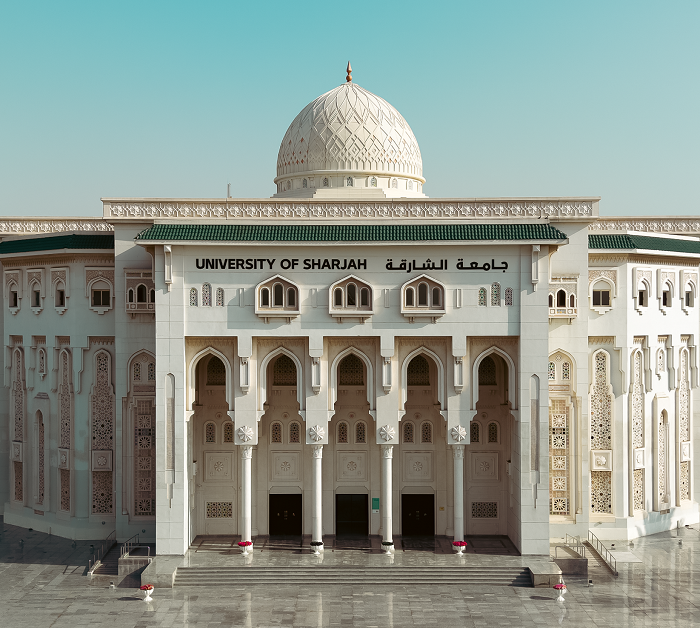
The University of Sharjah (UoS) is set to host the Sharjah International Conference on Advanced Materials 2026 (SICAM26) from 13 to 14 October 2026, bringing together a distinguished group of scientists, researchers, academics, specialists, and representatives of research institutions and industry from the United Arab Emirates and abroad, and will feature more than 100 scientific papers presented across a number of research and discussion sessions, helping establish the conference as a specialized platform that brings together fundamental research and advanced technological applications.
The conference aims to promote the exchange of scientific knowledge and expertise, strengthen local and international research partnerships, connect research outcomes with industrial and technological needs, and encourage the development of innovative and sustainable solutions in the fields of energy, water, health, and technology. It will also explore the opportunities offered by artificial intelligence and advanced computing in accelerating materials discovery, deepening the understanding of material properties, and advancing their practical applications.
The scientific program of the conference will include a series of lectures, specialized scientific sessions, oral research presentations, poster sessions, workshops, and an accompanying exhibition, offering participants extensive opportunities to present and discuss recent research findings and to strengthen scientific engagement among researchers, experts, and industry representatives.
This year’s conference assumes added significance in light of the rapid advances in artificial intelligence and machine learning, which are playing an increasingly important role in materials science and engineering. These technologies enable researchers to analyze large and complex datasets generated by advanced materials-characterization techniques, identify subtle patterns and relationships that may be difficult to detect using conventional approaches, and support the prediction of physical and chemical properties before materials are synthesized and experimentally tested.
Key scientific themes of the conference include advanced materials for renewable energy and energy-storage applications, perovskite solar cells and next-generation solar-energy harvesting technologies, materials and technologies for sensing and smart applications, nanomaterials, nano-engineering, and their applications across scientific and industrial sectors, biomaterials and biomedical applications, advanced materials for water treatment, purification, and desalination, computational modelling, simulation, and materials design, artificial intelligence and machine learning for materials discovery, analysis, classification, and property prediction, the use of artificial intelligence in analyzing advanced materials-characterization data and images, advanced techniques for characterizing and analyzing the physical, chemical, and structural properties of materials.
It is worth mentioning that the conference scientific sessions will discuss how artificial intelligence is contributing to a deeper understanding of data obtained through advanced characterization methods, including spectroscopy, electron microscopy, X-ray diffraction, and high-resolution imaging. AI-assisted approaches can enhance image and data analysis, facilitate the automated identification of microstructural features and defects, and help establish relationships among material structure, composition, properties, and functional performance. Such capabilities can accelerate research and development while improving the precision and depth of experimental interpretation.
The conference will place particular emphasis on postgraduate students and early-career researchers, providing opportunities for direct engagement with leading international scientists, discussion of research projects, knowledge exchange, and the development of professional and scientific networks that may evolve into future research collaborations and international partnerships.
Share
Quick Links
Activity Highlights