
Global
SAASST Hosts Geminids Meteor Shower Watch
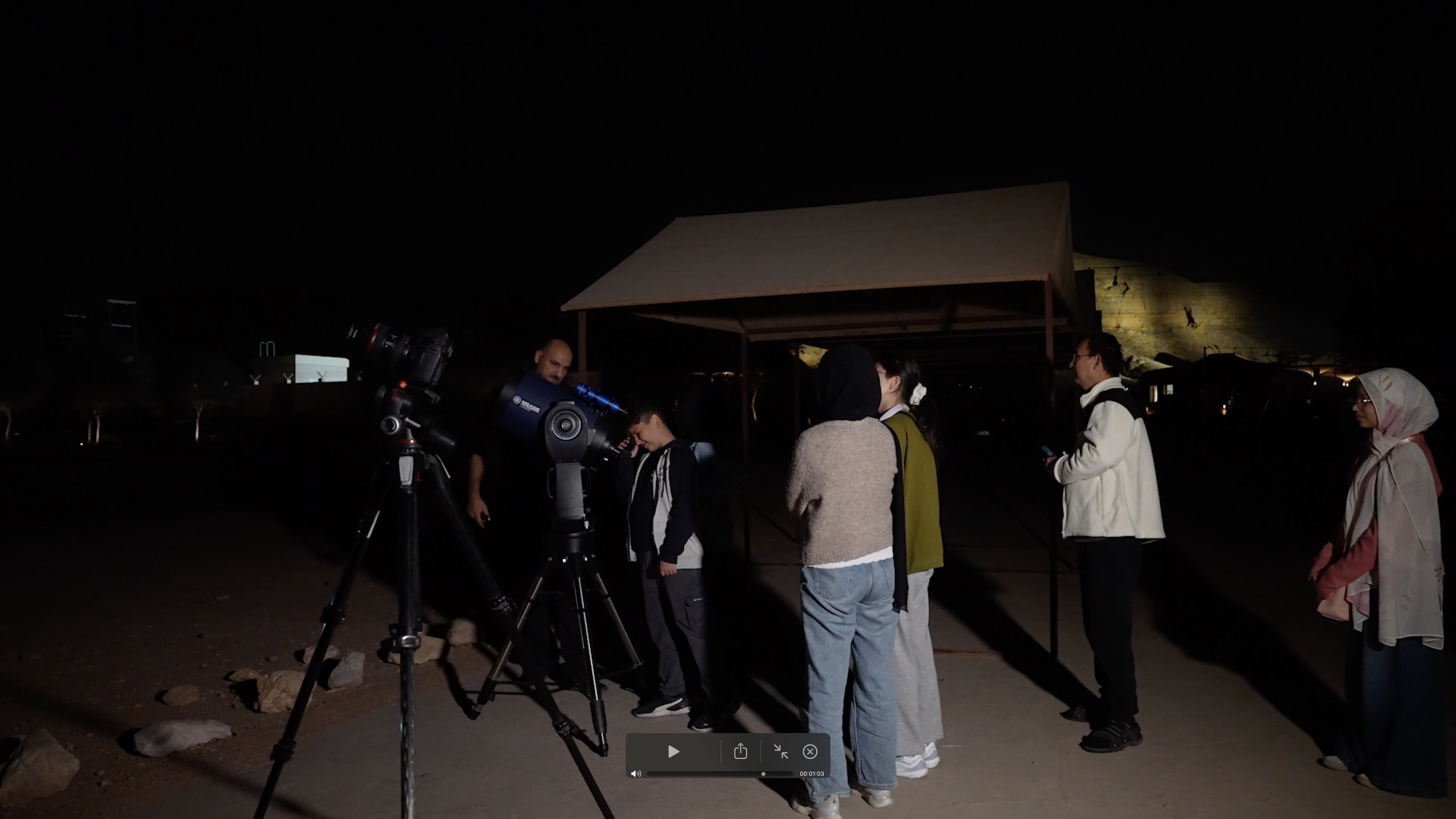
The Sharjah Academy for Astronomy, Space Sciences and Technology (SAASST) at the University of Sharjah has taken stargazers on a night-time journey to witness the 2025 Geminids meteor shower under Sharjah’s dark winter skies. The public observing trip, organized in cooperation with the Environment and Protected Areas Authority, formed part of the academy’s community outreach to spread astronomical knowledge, raise public awareness of space sciences, and offer a hands-on, entertaining scientific experience using state-of-the-art observing equipment.
The event was held at Buhais Geology Park in Sharjah, a site known for its naturally dark environment far from urban light pollution, which makes it an ideal location for scientific activities and observing celestial phenomena. The space observation drew a large turnout of researchers, enthusiasts, and specialists in space and astronomy, all eager to watch one of the most spectacular annual meteor displays.
The program opened with an introductory session that provided a detailed explanation of the Geminids, how they form, and the best ways to observe them. Organizers outlined peak viewing times, offered safety guidelines, and guided participants on how to use the available telescopes and binoculars. The session also introduced the night sky map and key celestial objects, while attendees tracked planets such as Jupiter and Saturn and observed several nebulae and other deep-sky targets, with experts on hand to answer questions and share up-to-date scientific insights.
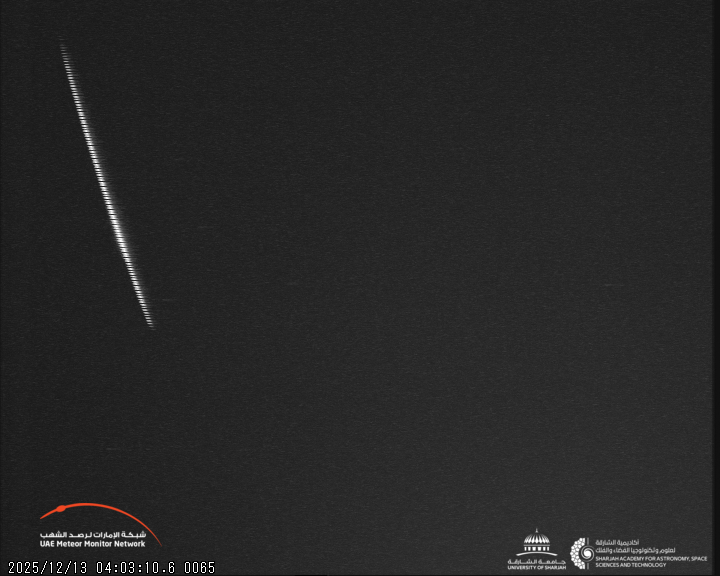
The Geminids are considered one of the richest and most reliable annual meteor showers, with rates in dark-sky locations typically ranging between 60 and 120 meteors per hour. Unlike most showers that originate from comet debris, the Geminids are produced by the asteroid 3200 Phaethon, which makes them unusual in the meteor calendar. Their meteors are relatively bright and move more slowly than many others, entering Earth’s atmosphere at around 35 kilometers per second, which gives observers a better chance of spotting them.
The shower takes its name from the constellation Gemini, as the meteors appear to radiate from a point in that part of the sky. It usually becomes active between 4 and 17 December each year, with peak activity on the night of 13–14 December. In the United Arab Emirates, the best time to observe the Geminids is from midnight until the early hours of dawn, when the radiant point is highest above the horizon and conditions are most favorable for sustained viewing.
Astronomy fans can start watching from dark locations as early as around 10 p.m., although meteor counts typically rise after midnight and build toward the peak. The shower occurs as Earth passes through a trail of tiny rocky fragments left behind by asteroid 3200 Phaethon along its orbit around the Sun. When these particles plunge into the upper atmosphere, they burn up as glowing streaks of light, creating the dense flurries of meteors that make the Geminids one of the most anticipated celestial events of the year.
Share
Quick Links
Activity Highlights